Geography

Culture & History
Spain's largest autonomous community by area extends from the Sierra Morena in the north to the Strait of Gibraltar in the south, encompassing a range of climates, landscapes, and a layered history that includes nearly eight centuries of Islamic rule.
Andalusia is the southernmost autonomous community on the Iberian Peninsula proper and the most populous after Madrid and Catalonia. Its territory spans approximately 87,600 km² — roughly the combined area of the Netherlands and Belgium. The community is divided administratively into eight provinces: Huelva, Seville, Cádiz, Córdoba, Málaga, Jaén, Granada, and Almería.
This division broadly follows historical patterns. The western provinces cluster around the Guadalquivir river valley and Atlantic coast; the eastern provinces face the Mediterranean and contain the Betic mountain systems including the Sierra Nevada. The range of geographic conditions within a single community is substantial: the Doñana wetlands in Huelva share the same community as the semi-arid badlands of Almería, which receive less than 200 millimetres of rainfall annually.
Geographic range
Mulhacén, in the Sierra Nevada (Granada): 3,479 m — highest peak on the Iberian Peninsula. Almería province: one of the driest inhabited areas in Europe, with some interior zones receiving under 200 mm annual rainfall.
Following the Umayyad conquest beginning in 711 CE, much of the Iberian Peninsula fell under Islamic rule for varying periods. The territory under Moorish control — known as Al-Andalus — reached its maximum extent within decades of the invasion, eventually contracting over the following centuries through the process of Christian reconquest (Reconquista). Granada, the last Islamic emirate on the peninsula, was surrendered in January 1492, marking the formal end of Islamic political authority in Iberia.
The architectural legacy of Al-Andalus concentrated in three principal sites: the Alhambra palace complex in Granada, the Mezquita-Catedral in Córdoba, and the Alcázar of Seville. All three are UNESCO World Heritage Sites and together form one of the most significant concentrations of medieval Islamic architecture outside the Middle East.
The Alhambra is a palace and fortress complex built primarily during the 13th and 14th centuries by the Nasrid dynasty, the last Islamic ruling house of Granada. It occupies a hilltop position above the city, with the Sierra Nevada visible to the southeast. The complex includes the royal palaces (Palacios Nazaríes), the Generalife gardens, and the earlier Alcazaba fortress.
The palace interiors are characterised by elaborate geometric tilework (azulejos), carved plaster filigree (muqarnas), and the systematic incorporation of water channels and pools as structural and acoustic elements. The Patio de los Leones, named for its central marble fountain supported by twelve sculpted lions, is the most reproduced of the palace's interior courtyards.
The Alhambra is among the most visited historic monuments in Europe. Timed entry tickets are required and are frequently sold out weeks in advance during peak season.
Córdoba served as the capital of the Umayyad Caliphate of Córdoba from 929 to 1031, a period during which it was among the largest cities in western Europe. The Mezquita (mosque), originally constructed on the site of a Visigothic church in 784 CE under Abd al-Rahman I, was progressively enlarged through successive Umayyad rulers. Its hypostyle prayer hall, characterised by rows of double-tiered arches in alternating red brick and white stone, covers approximately 23,000 square metres.
Following the Christian reconquest of Córdoba in 1236, the mosque was converted for Christian worship. A large Renaissance cathedral nave was inserted into the centre of the building in the 16th century — a modification that preserved the broader mosque structure while fundamentally altering its spatial experience.

Spain's distinct regional architectural traditions span from Moorish Andalusia to Gaudí's Catalan Modernisme. Photo: Wikimedia Commons / CC
Flamenco is a performing arts tradition encompassing song (cante), guitar playing (toque), dance (baile), and hand clapping (palmas). Its origins are traced to Andalusia, specifically to the Roma communities of the Guadalquivir river valley and the cities of Jerez de la Frontera, Seville, and Cádiz. UNESCO inscribed flamenco on its Intangible Cultural Heritage list in 2010.
The tradition draws on multiple musical lineages including Romani, Moorish, Byzantine, and Sephardic Jewish influences that converged in Andalusia following the medieval period. The oldest documented forms of cante, known as cante jondo (deep song), are associated with themes of grief, religious expression, and displacement.
Contemporary flamenco encompasses a spectrum from the most traditional forms performed in small venues (tablaos) to heavily fusion-influenced contemporary productions. The Bienal de Flamenco in Seville, held every two years, is the largest flamenco festival in the world and serves as a primary showcase for new work and traditional masters.
The Guadalquivir — Spain's only major navigable river — flows roughly 660 kilometres from its source in the Sierra de Cazorla (Jaén) westward through Córdoba and Seville before reaching the Atlantic at the Gulf of Cádiz. The lower valley's alluvial soils have supported continuous agricultural settlement for millennia.
The Guadalquivir valley today is one of Spain's most productive agricultural zones. Olive cultivation is particularly prominent: Jaén province alone contains the largest concentration of olive trees in the world, covering more than half of its agricultural surface. Spain as a whole is the world's largest producer of olive oil, and Andalusia accounts for the majority of national production.
Cotton, sunflower, cereals, and citrus fruits occupy the irrigated lowlands around Seville and Huelva. The Doñana National Park, occupying the delta and estuary zone where the Guadalquivir meets the Atlantic, is a UNESCO World Heritage Site and one of Europe's most important wetland ecosystems, serving as a critical staging point for migratory birds on the Atlantic Flyway.
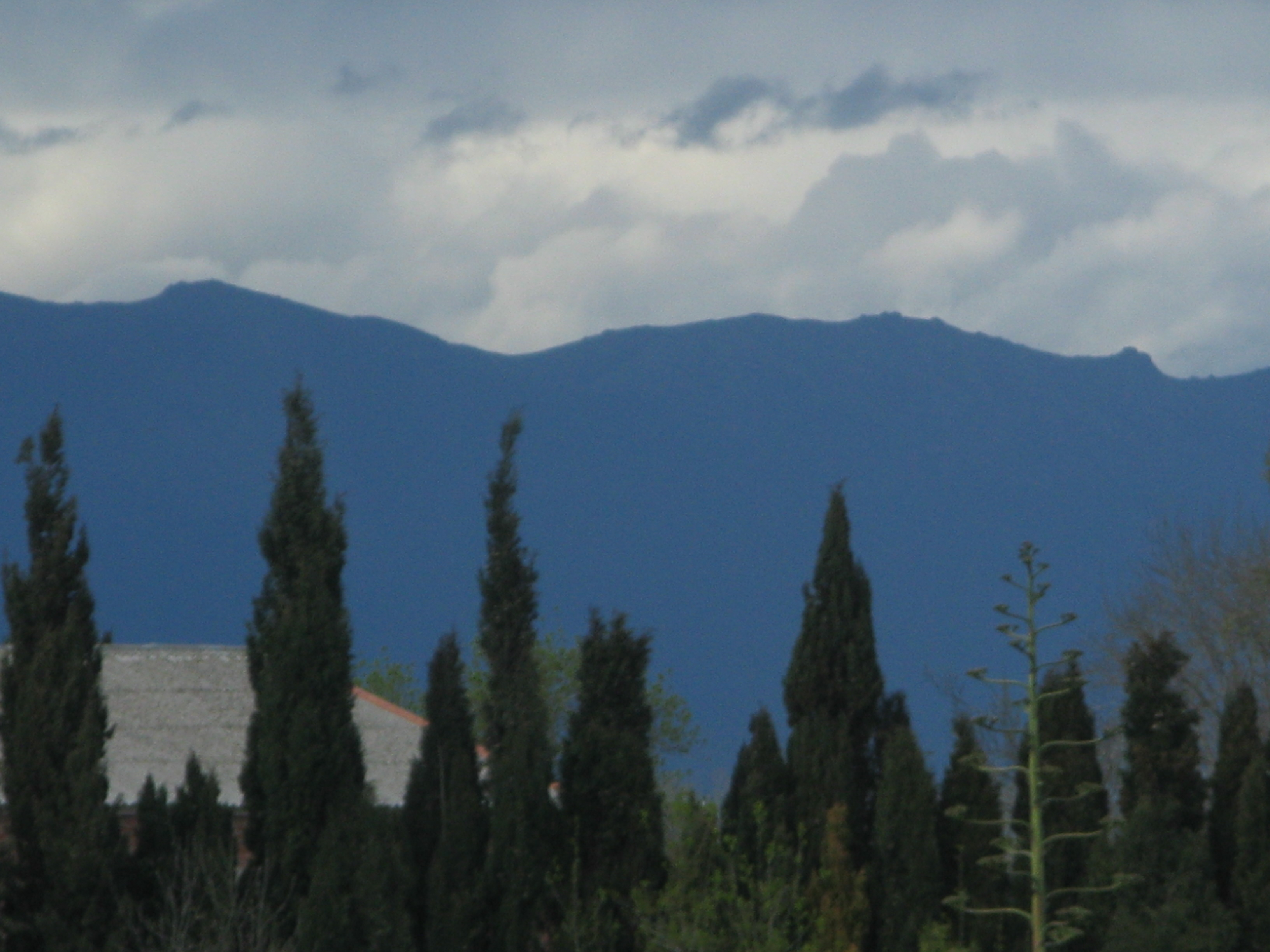
The Sierra Nevada range in Granada province contains Mulhacén (3,479 m) and Veleta (3,396 m), the two highest peaks on the Iberian Peninsula. The range hosts the southernmost ski resort in mainland Europe (the Sierra Nevada ski resort, operating from November to May in good years) alongside a diverse alpine flora including numerous endemic species adapted to the range's unusual combination of high altitude and intense southern solar radiation.
To the south, the range drops steeply to the Mediterranean coast. The area known as the Axarquía in eastern Málaga and the Alpujarras valleys between the Sierra Nevada and the sea preserve mountain villages with a distinctive architectural character — flat-roofed houses using slate and schist — that derives directly from the Moorish period.
The Costa del Sol (Málaga) and Costa de Almería represent the most intensive coastal development in Andalusia. Almería's inland greenhouse agriculture — concentrated in El Ejido and surrounding municipalities — covers an area visible from space, supplying a substantial proportion of northern Europe's out-of-season salad vegetables.
"Andalusia's landscape is a record of accumulation — layers of Roman, Visigothic, Islamic, and Christian occupation that no single era fully erased."
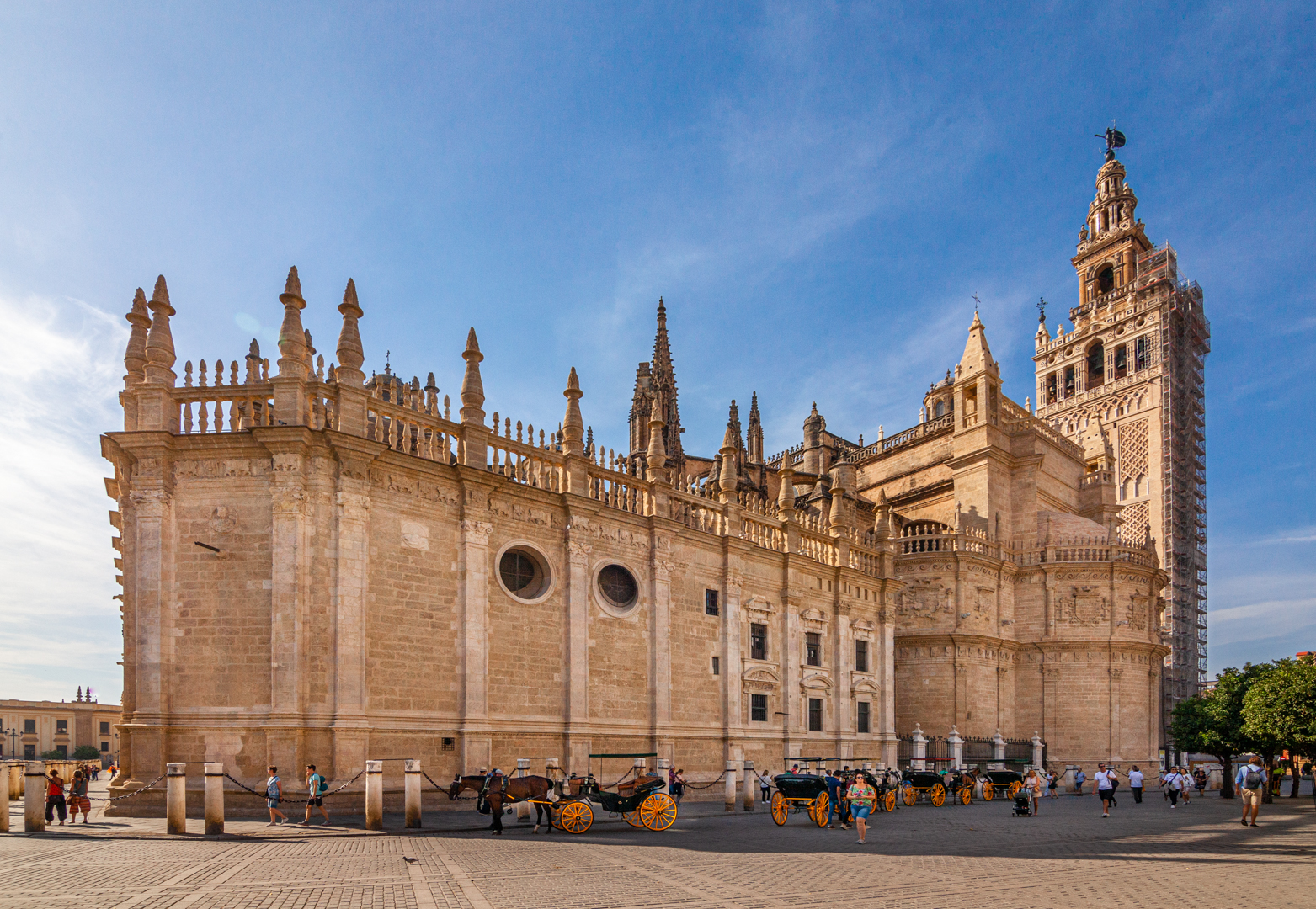
Seville is Andalusia's capital and its largest city. Its historic centre contains the Cathedral of Santa María de la Sede (the world's largest Gothic cathedral by interior volume, completed in 1506 on the site of a former mosque), the Alcázar (a royal palace in continuous use since the 10th century, now a UNESCO World Heritage Site), and the Archive of the Indies, which holds the documentary record of Spain's colonial administration in the Americas.
The city sits on the Guadalquivir at the limit of ocean navigation, a position that made it the centre of Spanish trade with the Americas from 1503 to 1717. The physical evidence of this period includes the Torre del Oro (Golden Tower, built in 1220 as part of the city's defensive walls) and the 16th-century exchange building (Lonja de Mercaderes), now the Archive of the Indies.